



POTS – what is it?
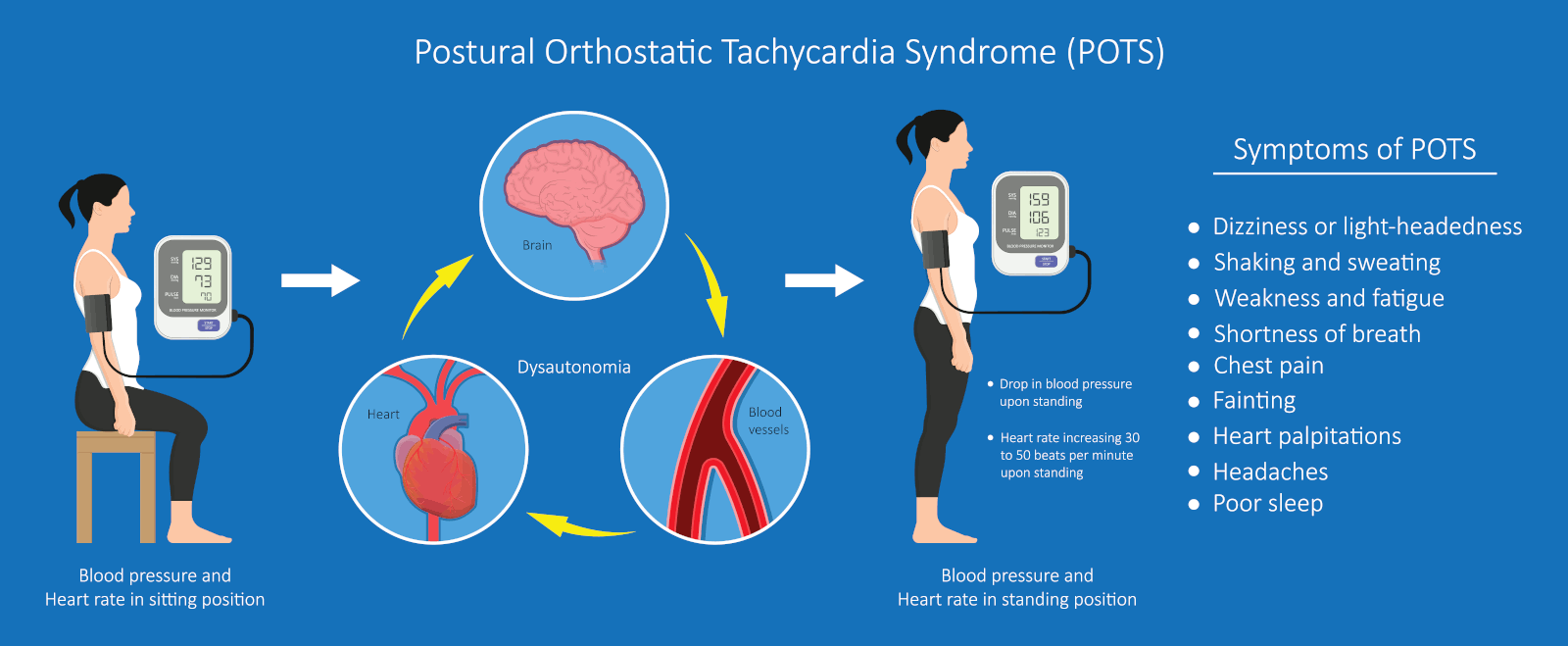
Postural Orthostatic Tachycardia Syndrome (POTS) is a condition that affects how your body controls blood flow and heart rate when you stand up.


What happens in a healthy body?
When you stand up, gravity pulls blood down to your legs. Your body quickly adjusts by making your blood vessels tighten and your heart beats a bit faster to keep blood flowing to your brain, so you don’t feel dizzy.
What happens in POTS?
In people with POTS, this adjustment doesn’t work properly. The blood doesn’t flow back to the brain as it should. To compensate, the heart starts beating much faster compared to when you were sitting down.
Common symptoms:
When standing up, people with POTS may feel dizzy, lightheaded, faint, tired, or even experience brain fog (trouble thinking clearly). Their heart might race, and they can feel weak or shaky. Symptoms often improve when sitting or lying down.
Who does it affect?
POTS is more common in young women, but it can affect anyone. It might show up after an illness, injury, or during times of physical or emotional stress.

People with POTS may experience a reduction in quality of life due to the symptoms they experience. At SouthWest Cardiovascular we have codesigned a management program with local experts to help reduce the symptoms you experience when going about day-to-day activities.
At the GP we will ask them to take
- A full history of your symptoms and potential triggers
- Complete blood count and thyroid function test
- An ECG
Getting the diagnosis right
We want to ensure that you have the correct diagnosis of your clinical condition so that you can be started on the treatment course that’s right for you. There are a range of conditions that can present with similar symptoms and increased heart rate which need to be excluded.
Upon referral to SouthWest Cardiovascular
Cardiac testing to exclude other cardiac causes
Holter monitoring
This is a test to see how your heart rate responds over 24 hours to the various stimulus of day-to-day activities and helps our Cardiologists to come to a diagnosis
Echo
This is a test to look at the structure of your heart, this helps our cardiologists to exclude other conditions that might explain some of the symptoms you have been experiencing.
Treatment
If the results show that the most likely cause of your symptoms is POTS, you will commence through our structured program designed to reduce the impact of POTS has on your quality of life.
Exercise
The most effective treatment for POTS is to complete a structured and progressive exercise program with a specialist exercise physiologist.
Structured, progressive exercise programs have been shown to strengthen your heart, helping restore a healthy response to standing and reducing or in some cases alleviating symptoms. More severe symptoms may require a longer exercise program.
We will refer you to Max Results exercise physiology in Bunbury to commence a personalised exercise program. Your private health insurance may cover the program or you may be eligible for a GP management plan (item 721- Exercise Physiology sessions – item 10953).
Salt Intake
If your blood pressure is not elevated, we suggest that you aim for 10-12g of salt in your diet daily. This can be achieved by adding salt to your meals and adding some salty foods to your diet, while salty snacks are fine occasionally, focus on less processed foods like salted nuts, cheese, or broth. A dietitian can help you to create a diet plan to support your blood volume regulation while you are undertaking your structured exercise plan.
Daily Fluid Intake
It is recommended that you drink at least 2L of fluid in the winter, increasing to 3L in the summer. You should not include the fluids from caffeinated or alcoholic drinks in this total.
Compression leggings
To help your body move blood around your body as it should when you stand you could consider wearing compression leggings. Many sports wear clothing companies make compression leggings that are comfortable to wear all day and can help to reduce your symptoms.
Medication
Once you have completed your exercise plan you will need to return to your GP for review, depending on the change to your symptoms a consultation with one of the cardiologists may be required to commence medication for your heart rate.